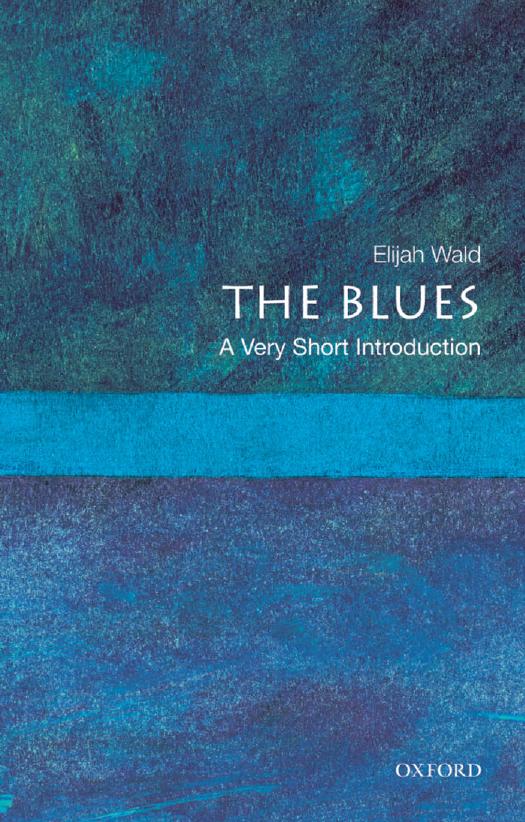
The Blues: A Very Short Introduction (Very Short Introductions) by Elijah Wald
Author:Elijah Wald [Wald, Elijah]
Language: eng
Format: azw3, pdf, mobi
Publisher: Oxford University Press
Published: 2010-07-01T04:00:00+00:00
8. The afternoon blues workshop at the 1963 Newport Folk Festival. From left: John Hammond, Mississippi John Hurt, Clarence Cooper, Dave Van Ronk, Sonny Terry, and John Lee Hooker.
Though few fans insisted on that level of purity, the revivalists in general came to blues with different tastes and standards than previous audiences had. In the past, blues had attracted listeners with catchy dance rhythms, rowdy humor, and songs that reflected the fans’ lives, troubles, and dreams. The revivalists, by contrast, were looking for an alternative to the light entertainment of the pop scene and for insight into vanished or foreign worlds. As a result, versatile professionals who had adapted their work to the popular market—Carr, Tampa Red, T-Bone Walker, Dinah Washington—were devalued in favor of performers who exemplified older-sounding, more obviously regional styles, and occasionally an introspective songwriter such as Skip James, who could be appreciated as a folk poet.
The revivalist aesthetic brought new attention to some wonderful artists, a few of whom were “rediscovered” and found new careers in the twilight of their lives. The most successful of these was a Delta guitarist and singer named Mississippi John Hurt. Hurt was a farmer and occasional bootlegger who played music primarily for his own amusement, and as a result he had not needed to keep up with commercial trends. His style and repertoire reached back to the nineteenth century and had already sounded old-fashioned when he made his first records in 1928. However, to folk audiences his mix of country dance tunes, ragtime ditties, badman ballads, religious songs, and early blues provided a variety that was lacking in the work of his more modern-sounding, blues-focused contemporaries. He was also an exceptionally charming performer, with a sparkling sense of humor to match his warm, gentle voice and crisp guitar work.
The folk-blues fans were trying not only to revive and preserve older styles but also to establish the music they loved as serious, valuable art. Along with recording and promoting rural performers, they interviewed them, researched their past, and attempted to analyze and classify regional and historical styles. Musicians like Hurt, who played relatively little blues, were dubbed “songsters” (a common synonym for “singer” in the rural South), and valued for the breadth of their repertoires and their preservation of pre-twentieth-century styles. Collectors sought out the records of Henry “Ragtime Texas” Thomas, who had recorded a uniquely varied and archaic repertoire in the late 1920s, and discovered previously unrecorded players such as the Texan Mance Lipscomb, who like Hurt had been born in the 1890s but made his first record for the collector-oriented Arhoolie label in 1960.
Along with presenting living artists, the revivalists organized reissues of old records. The early ventures were on specialist labels such as Folkways and Riverside, but in 1961 Columbia released an LP of Robert Johnson’s recordings, titled King of the Delta Blues Singers. Since the late 1930s, a small clique of jazz and folk fans had regarded Johnson as an exceptional figure, and this album established him
Download
The Blues: A Very Short Introduction (Very Short Introductions) by Elijah Wald.pdf
The Blues: A Very Short Introduction (Very Short Introductions) by Elijah Wald.mobi
This site does not store any files on its server. We only index and link to content provided by other sites. Please contact the content providers to delete copyright contents if any and email us, we'll remove relevant links or contents immediately.
The Goal (Off-Campus #4) by Elle Kennedy(13696)
Kathy Andrews Collection by Kathy Andrews(11855)
Diary of a Player by Brad Paisley(7599)
Assassin’s Fate by Robin Hobb(6234)
What Does This Button Do? by Bruce Dickinson(6214)
Big Little Lies by Liane Moriarty(5820)
Altered Sensations by David Pantalony(5113)
Pale Blue Dot by Carl Sagan(5021)
Sticky Fingers by Joe Hagan(4211)
The Death of the Heart by Elizabeth Bowen(3630)
The Heroin Diaries by Nikki Sixx(3555)
Confessions of a Video Vixen by Karrine Steffans(3317)
Beneath These Shadows by Meghan March(3315)
How Music Works by David Byrne(3286)
The Help by Kathryn Stockett(3155)
Computational Linguistics and Intelligent Text Processing: 20th International Conference, CICLing 2019 La Rochelle, France, April 7â13, 2019 Revised Selected Papers, Part I by Alexander Gelbukh(3126)
Jam by Jam (epub)(3102)
Harry Potter 4 - Harry Potter and The Goblet of Fire by J.K.Rowling(3086)
Strange Fascination: David Bowie: The Definitive Story by David Buckley(2877)
